




Mehr als Mode. Ein W-Seminar zeigt Haltung
by Angelina Guaita (2010) Gisela-Gymnasium, München/Germany on 2026-07-27
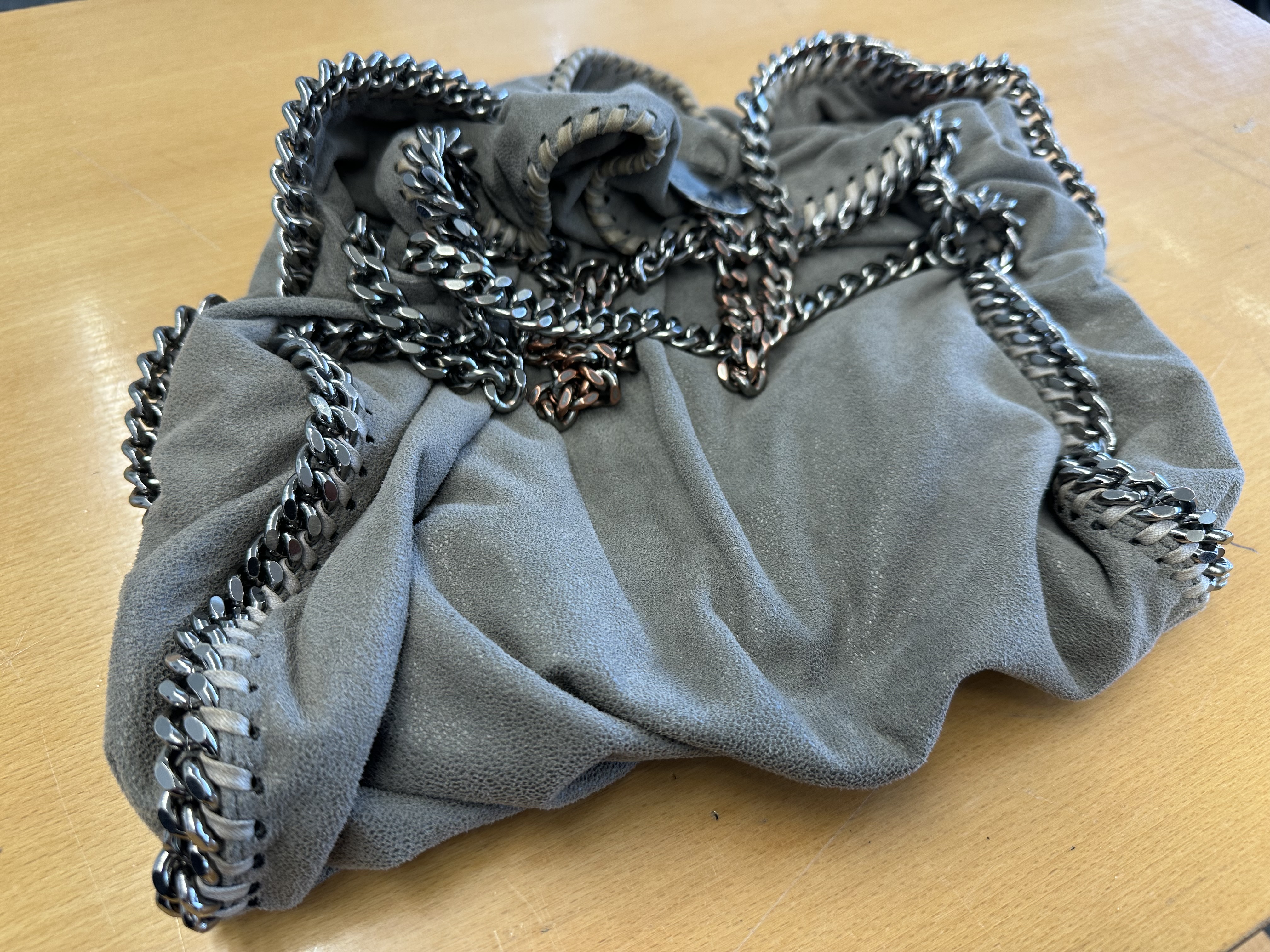
Image: Handbag created by Stella McCartney.
Watch also the interview about “Fashion & Identity” with students from the USA on trait d’union TV right here. In the article “Fashion & Identity – Interview with U.S. Students” you will find detailed information on this topic.
Mehr als Mode: Ein W-Seminar zeigt Haltung
Mode ist weit mehr als das, was wir jeden Morgen aus dem Kleiderschrank ziehen. Sie kann Kunst sein, politisches Statement oder ein Ausdruck gesellschaftlicher Veränderungen. Genau das zeigte das W-Seminar (wissenschaftspropädeutisches Seminar) „Fashion and Identity“, dessen Schülerinnen ihre Präsentationen über diverse Themen im Bereich Fashion vorstellten.
Durch die spontane Nachfrage von Frau Siauve kamen wir dazu, uns drei Vorträge des W-Seminars anzuhören und im Anschluss mit amerikanischen Austauschstudenten ein Interview zu führen.
Die erste Präsentation beschäftigte sich mit Haute Couture, der exklusiven Form der Mode. Ihren Ursprung hatte sie in Paris, wo Designer begannen maßgeschneiderte Einzelstücke für wohlhabende Kunden anzufertigen. Haute Couture steht seitdem für höchste Handwerkskunst, hochwertige Verarbeitung und kreative Freiheit. Im Laufe der Zeit entwickelte sie sich zu tragbarer Kunst, die bis heute nur eine kleine Zielgruppe erreicht. Dennoch beeinflusst sie internationale Trends und dient als Experimentierfeld für viele Modehäuser.
Im zweiten Vortrag stand die britische Designerin Stella McCartney im Mittelpunkt. Sie ist eine Pionierin nachhaltiger Mode, indem sie auf Leder und andere tierische Produkte verzichtet und stattdessen innovative und umweltfreundliche Materialien verwendet. Die Präsentation zeigte, dass Nachhaltigkeit mehr als nur ein Trend ist, sondern dass diese ein Umdenken der Produktion, des Konsums und der gesamten Modeindustrie mit sich bringt.
Die dritte Präsentation widmete sich dem Thema „Fashion and Feminism“ mit Schwerpunkt auf die erste feministische Welle, die Mitte des 19. Jahrhunderts begann und ungefähr 1920 endete. In dieser Zeit kämpften Frauen vor allem um grundlegende Rechte, wie Bildung und Wahlrecht. Auch die Mode spielte dabei eine Rolle. Enge Korsetts und schwere Röcke galten als Symbol für gesellschaftliche Einschränkung, wurden jedoch von den Feministinnen abgelehnt. Sie forderten praktischere Kleidung. So wurde die Mode zu einem Ausdruck von Selbstbestimmung und gesellschaftlichem Wandel.
In einer kleinen Pause setzten wir uns mit den amerikanischen Austauschstudenten zusammen, um mit ihnen über die verschiedenen Präsentationen zu reden. Es wurde viel über Nachhaltigkeit als Zukunft der Mode diskutiert, aber auch als Ausdruck individueller Freiheit. Neben kulturellen Unterschieden wurde vor allem eins deutlich. Für einige ist Mode ein Ausdruck von Persönlichkeit und Individualität, für andere wiederum ein Spiegel für gesellschaftliche und politische Werte. Diese unterschiedlichen Perspektiven während des Gesprächs machten es besonders spannend und zeigten wie Mode formen und reflektieren kann.
Im W-Seminar wurde uns klar, dass Mode weit über Trends hinausgeht. Sie verbindet Kunst, Umweltbewusstsein, Politik und persönliche Identität.
Più che moda: un seminario W mostra atteggiamento
La moda è molto più di ciò che tiriamo fuori dall`armadio ogni mattina. Può essere arte, dichiarazione politica o espressione di cambiamenti sociali. È proprio questo che ha dimostrato il seminario W (seminario di preparazione alla ricerca scientifica) “Fashion and Identity”, le cui studentesse hanno presentato le loro relazioni su vari argomenti nel campo della moda.
Grazie alla richiesta spontanea della signora Siauve, abbiamo potuto assistere a tre conferenze del seminario e, in seguito, intervistare alcuni studenti americani in scambio culturale.
La prima presentazione ha riguardato l`alta moda, la forma più esclusiva della moda. Ha avuto origine a Parigi, dove gli stilisti hanno iniziato a realizzare capi unici su misura per clienti facoltosi. Da allora, l`alta moda è sinonimo di massima maestria artigianale, lavorazione di alta qualità e libertà creativa. Nel corso del tempo si è evoluta in arte indossabile, che ancora oggi raggiunge solo un piccolo gruppo target. Tuttavia, influenza le tendenze internazionali e funge da campo di sperimentazione per molte case di moda.
La seconda conferenza era incentrata sulla stilista britannica Stella McCartney. È una pioniera della moda sostenibile, in quanto rinuncia all`uso di pelle e altri prodotti di origine animale, utilizzando invece materiali innovativi ed ecologici. La presentazione ha dimostrato che la sostenibilità è più di una semplice tendenza, ma che comporta un ripensamento della produzione, del consumo e dell`intera industria della moda.
La terza presentazione era dedicata al tema “Moda e femminismo”, con particolare attenzione alla prima ondata femminista, iniziata a metà del XIX secolo e terminata intorno al 1920. In quel periodo le donne lottavano soprattutto per ottenere diritti fondamentali come l`istruzione e il diritto di voto. Anche la moda ha avuto un ruolo importante in questo contesto. I corsetti stretti e le gonne pesanti erano considerati un simbolo di restrizione sociale e venivano rifiutati dalle femministe, che chiedevano abiti più pratici. La moda è così diventata un`espressione di autodeterminazione e cambiamento sociale.
Durante una breve pausa ci siamo seduti con gli studenti americani in scambio culturale per parlare con loro delle diverse presentazioni. Si è discusso molto della sostenibilità come futuro della moda, ma anche come espressione della libertà individuale. Oltre alle differenze culturali, è emerso chiaramente un aspetto in particolare. Per alcuni la moda è un`espressione di personalità e individualità, per altri invece è uno specchio dei valori sociali e politici. Queste diverse prospettive durante la conversazione hanno reso il dibattito particolarmente interessante e hanno mostrato come la moda possa plasmare e riflettere.
Nel seminario W ci è apparso chiaro che la moda va ben oltre le tendenze. Essa unisce arte, consapevolezza ambientale, politica e personalità.
More Than Fashion: A Seminar W Takes a Stand
Fashion is far more than just what we pull out of our closets every morning. It can be art, a political statement, or an expression of social change. This was precisely what the seminar W (research preparation seminar) "Fashion and Identity" demonstrated, with its students presenting on various topics within the field of fashion.
Thanks to Ms. Siauve`s spontaneous request, we had the opportunity to attend three of the seminar`s presentations and subsequently conduct an interview with American exchange students.
The first presentation focused on haute couture, the exclusive form of fashion. It originated in Paris, where designers began creating bespoke, one-of-a-kind pieces for wealthy clients. Since then, haute couture has stood for the highest level of craftsmanship, superior workmanship, and creative freedom. Over time, it has evolved into wearable art, which to this day reaches only a small target audience. Nevertheless, it influences international trends and serves as a testing ground for many fashion houses.
The second presentation centered on the British designer Stella McCartney. She is a pioneer of sustainable fashion, foregoing leather and other animal products in favor of innovative and environmentally friendly materials. The presentation demonstrated that sustainability is more than just a trend; it entails a fundamental rethinking of production, consumption, and the entire fashion industry.
The third presentation focused on "Fashion and Feminism," specifically the first wave of feminism, which began in the mid-19th century and ended around 1920. During this period, women primarily fought for fundamental rights such as education and the right to vote. Fashion also played a role in this struggle. Tight corsets and heavy skirts were seen as symbols of social constraint but were rejected by feminists. They demanded more practical clothing. Thus, fashion became an expression of self-determination and social change.
During a short break, we sat down with the American exchange students to discuss the various presentations. There was much discussion about sustainability as the future of fashion, but also as an expression of individual freedom. Besides cultural differences, one thing became particularly clear. For some, fashion is an expression of personality and individuality, while for others it reflects social and political values. These different perspectives during the discussion made it particularly interesting and showed how fashion can shape and reflect.
In the seminar, we realized that fashion goes far beyond trends. It connects art, environmental awareness, politics, and personal identity.